Politics, Punchlines, and Personality: Finding Your Voice in a Noisy World
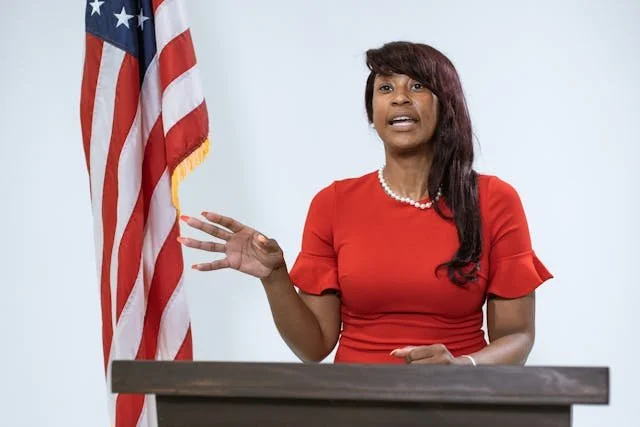
Post-Obama, many politicians leaned hard on the theme of hope. And voters now have a hope hangover. The word was everywhere—overused, overpromised, and eventually flattened into something that felt more like branding than belief.
Then came President Trump, whose stream-of-consciousness style. His follower base genuinely appreciates the crazy-uncle-with-no-filter vibe. It feels unpolished, unfiltered, and oddly like you’re shooting the shit with someone in a bar whose had a couple of drinks. And Trump knows exactly what he’s doing. He might announce tariffs one day and walk them back the next, taking the country on a wild bull ride. I think the kids call it rage-baiting. His messaging is designed to wear his opponents out.
Humor as a Political Strategy
Enter Zohran Mamdani—a Queens representative who recently won the Democratic primary for Mayor of New York—who flipped the political script again, this time with humor. Really good humor.
Humor is incredibly hard to pull off. Miss the mark, and you’re left with only two other categories: cringe or, worse, disaster. I once had a boss tell me, “If you have to ask whether it’s funny, it’s probably not funny.” (And for those of you who know me, about 90% of my jokes fall squarely into the funny-to-me-and-me-only category.)
Mamdani, the son of acclaimed filmmaker Mira Nair, clearly has a head start when it comes to media instincts. His videos land with near-perfect comedic timing. And Broad City fans are rejoicing at the sight of Ilana Glazer as one of his supporters—and possibly even a behind-the-scenes creative force on the campaign.
Watching the Midterms Up Close (Chicago Edition)
Here in Chicago, I’ve attended several political events recently. There are currently 18 candidates running in the Democratic primary for Illinois’ 7th Congressional District, with the election set for March 17, 2026.
Some candidates are clearly riding Mamdani’s coattails, echoing anti-establishment language and tone. Others are taking a quieter, my-proof-is-in-the-pudding approach.
It’s been fun to see how so many different candidates approach their messaging for the same role. Some are mimicking Mamdani or taking a grassroots approach with less funny attempts, some are still using the messages of hope, and others are taking a more simple approach of finding what is true to them.
Take James Talarico, a pastor in Austin, who uses his conservative upbringing alongside progressive politics to shape his messaging. His delivery feels less like speeches and more like sermons—and people are listening.
Or look at San Francisco Mayor Daniel Lurie, who uses social media to spotlight the city’s beauty and possibility, not just its housing crisis and challenges. His tone may be flatter, but it’s sincere. You can feel what he cares about.
Both approaches work because they’re aligned. The message sounds like the person reflecting their deepest beliefs.
Finding (and Owning) Your Voice
No matter where you fall politically—or whether you’re leading a campaign, a nonprofit, or an organization—everything you say and how you say it matters.
Have you chosen your tone? Is it humorous? Serious? Measured? More importantly: is it fresh, is it yours, and is it actually authentic to who you are? Chasing what “works” instead of leaning into who you are is tempting, but also risky.
At the end of the day, Mamdani proved what happens when you commit fully to your own voice. He found it—and trusted it enough to let voters meet him there.
Tips for Finding Your Voice
Find the story that matches your message. People love having a picture painted for them. If you care about immigrants’ rights, share your own experience—or someone else’s—truthfully and specifically. If you’re launching a new app, talk about the one user whose life it actually changed. Stories help people see what you’re offering.
Stop copying what works. Start owning what’s yours.
If your message feels like a performance, people will sense it immediately. The most effective communicators sound comfortable in their own skin—not like they’re auditioning for someone else’s success.
Choose what you’re willing to repeat.
Repetition isn’t lazy when it’s grounded in belief. Saying the same thing consistently builds trust, especially in a world that feels unpredictable.
Say it out loud before you post it.
If it doesn’t land in conversation, it won’t land on camera. If it feels awkward to say, it will feel awkward to hear. Your voice should sound like something you’d actually say to a real person. (Tools like Yoodli.ai can help with real-time feedback.)
Be specific, not broad.
Vague language disappears. Specific stories, sharp observations, and well-placed humor stick. Authenticity doesn’t mean oversharing—it means letting people see how you make sense of what’s happening.
Mamdani didn’t win because he found the perfect tone. He won because he committed to a voice that matched his values—and trusted voters to meet him there.
In a political moment crowded with noise, clarity and authenticity are superpowers. They build trust. And trust still wins.
So—what’s your tone?
If you don’t know yet and want help finding it, reach out to The Good Word at hellogoodword@gmail.com.